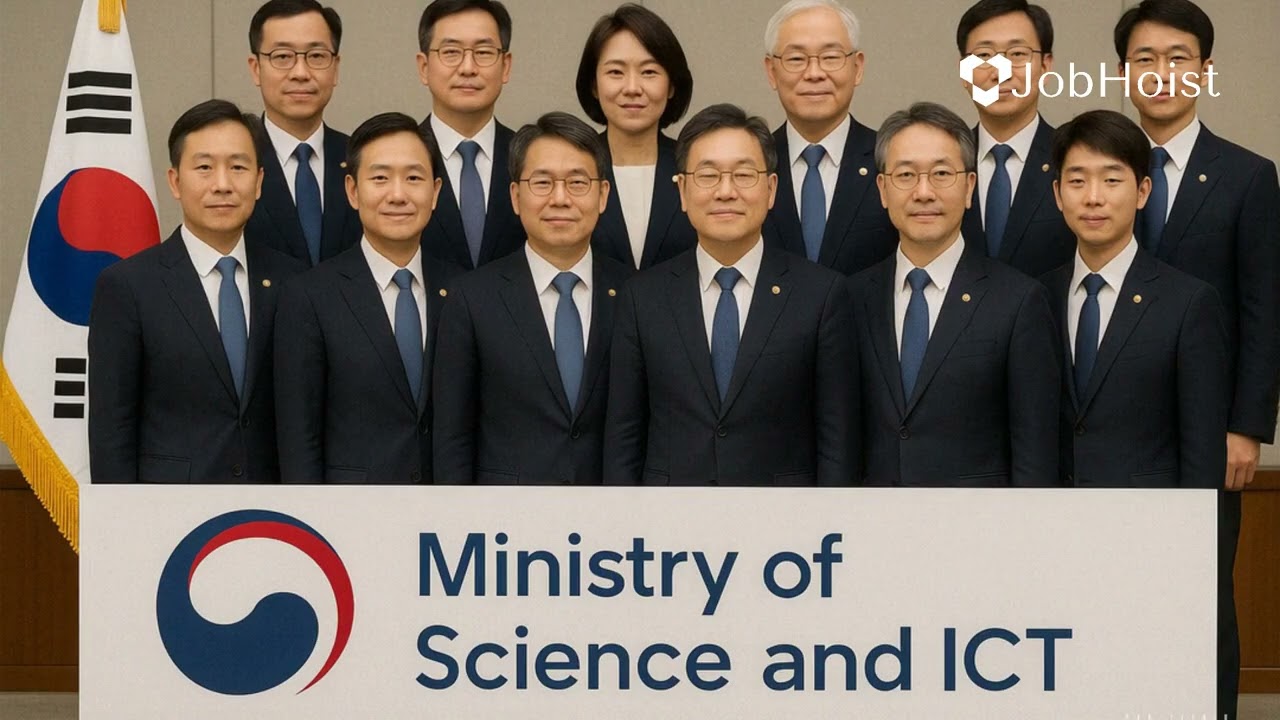
How South Korea Became a Tech Giant — What Kenya Must Learn
South Korea’s Tech Miracle: More Than Luck
Great technology doesn’t begin in a garage or a lab. It begins with visionary policies, long-term funding, and a united ecosystem of government, universities, and private innovators. South Korea figured this out decades ago—and the results speak for themselves.
Today, South Korea is a global leader in AI, robotics, and 5G technology. It’s not by chance. The country invests over 4.5% of its GDP into research and development (R&D)—one of the highest rates in the world.
That funding is matched by policy. South Korea’s government doesn’t just fund science—it builds bridges. Policies intentionally connect academic institutions, tech firms, and government agencies to accelerate problem-solving, commercialization, and global competitiveness.
Innovation Is Intentional, Not Accidental
South Korea’s rise as a technology powerhouse is a case study in what happens when nations take innovation seriously. Government-supported incubators, university-industry joint ventures, and strong intellectual property protections have made Seoul a hotspot for cutting-edge breakthroughs.
The country’s tech ecosystem didn’t evolve randomly. It was engineered—with intent.
Kenya’s Moment: Sprinting Without a Track?
Kenya is full of talent. The country boasts a vibrant community of young developers, resilient startups, and fast-growing fintech innovations. Nairobi is often called the “Silicon Savannah.”
But there’s a problem. Without strong public investment in R&D and without policies that connect academia with industry, Kenya risks losing momentum. We are sprinting—but without a track.
Kenya spends less than 0.1% of GDP on R&D, far below the African Union’s recommended 1%. Universities and tech hubs rarely collaborate at scale, and government funding remains sporadic and uncertain.
What Kenya Can Learn From South Korea
To become Africa’s tech leader, Kenya needs more than talent—it needs structure.
Increase R&D investment: Aim for at least 1% of GDP by 2030.
Create national innovation hubs: Fund partnerships between universities, tech firms, and public agencies.
Pass smart policies: Focus on intellectual property, startup incentives, and education-to-employment pipelines.
Encourage venture capital: Offer tax reliefs and guarantees for investing in local startups.
Innovation Needs Policy—Not Just Passion
Kenya’s youth are ready. Our startups are capable. But the future of Kenyan technology depends on visionary leadership that turns talent into global impact. Let’s fund innovation, connect our institutions, and create policies that don’t just support technology—but accelerate it.
This article has been produced by JobHoist — a leading AI-powered video advertising company in Nairobi, Kenya. Visit us at Room 9, Hazina Towers, 16th Floor.